Showing posts with label health. Show all posts

Sunday, November 23, 2014

Fun ~ Fit ~ Fast and Type One Diabetes

November is Type One diabetes month; a month where awareness for those living with Type One diabetes is brought to life. 


Diabetes, clinically known as diabetes mellitus, is a disorder in which the pancreas has a difficult time regulating its blood glucose levels.  There are two types of diabetes; Type One (juvenile diabetes) and Type Two diabetes.  While both are something to be taken very seriously this article is going to specifically speak about Type 1 (T1D).  

Type One diabetics are known as insulin dependent as they must manually take insulin in order for the body to continue functioning.  An autoimmune disease that occurs when the bodies immune system attacks and destroys beta-cells within the pancreas resulting in the body no longer being able to independently produce insulin needed to break down glucose levels within the body.  


Living with T1D can be very challenging and often frustrating as you are constantly having to watch the amount of carbohydrates you are consuming and your blood sugar levels are always in the back of your mind.  Yet living with T1D is not debilitating; one of the largest misconceptions is that a person with T1D cannot live a normal life.  There are a lot of myths and lack of knowledge from the public in regards to T1D such as someone with diabetes cannot participate in sports, they can't eat sugar, and no matter what someone with diabetes does there will always be complications in the end.  Yet these are all myths.  A diabetic can participate in athletics and exercise; in fact leading a healthy and fit lifestyle ensures a reduce in the chance of having complications later in life.  Physical exercise helps to lower blood sugar levels keeping them within a healthy range.  The key to preventing future complications is maintaining within a healthy range; it is known that merely four years spent constantly in the two - three hundreds can start causing damage, something that can be prevented by living a fit and healthy lifestyle.

One of the biggest issues with T1D is the lack of education many receive when being diagnosed with diabetes.  When you are not educated on the affects carbohydrates, protein, fats, and sugars have on your body it makes it hard to understand why your body is acting the way it is.  Yes you are probably told you should stay within a certain range and when you should inject insulin however it can be seen that the affects that not strictly monitoring your glucose levels can have on a person's body is not adequately brought to attention. Often the idea that living a fit and healthy life, where one exercises on a daily basis, eats well balanced meals, and keeps a close eye on their blood glucose levels is put on the back burner. 

Some of the main goals that those with T1D should be made aware of are:
  • Maintaining normal growth and development (particularly in children)
  • Keeping blood sugar levels within a target range (not too high, not too low) by controlling through a balance of exercise, healthy eating, and insulin
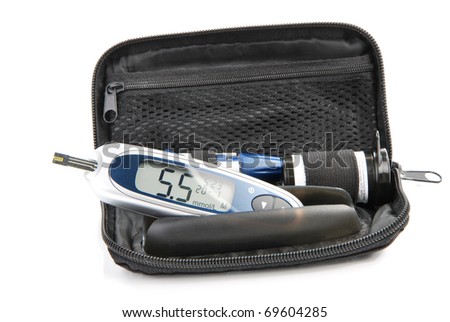
This article is inspired by my amazing boyfriend, Brandon Bowker, who in February will have reached the milestone of 15 years living with T1D.  At the age of 15 Brandon was diagnosed with T1D and since then he has made it his a mission to live a healthy, fit, and normal lifestyle.  Even at the age of 15 he made the mature decision to constantly pay attention to his blood sugar levels, and to continue living his life as was.  While it was a challenge and learning to count carbohydrates and sugars was not always something he wanted to do he did not let it stop him from running cross country, playing basketball, and baseball.  Now 15 years later his strength and dedication is something that inspires me everyday. 


His blood sugar levels are steadily within a healthy range resulting in his HBA1C levels being as low as ever, golf game the best he's ever had, and in the best shape since he was in high school.  He never lets anything stand in his way and because of it has overcome many obstacles put in his way.  Someday he wishes to help others who are diagnosed with diabetes to understand that just because you have diabetes does not mean you can't lead a fit and healthy life.  His passion for life has been an inspiration for myself throughout my work and training.  

Currently approximately 3 million people are living with T1D and more than 15,000 children are newly diagnosed with T1D yearly.  While the research is out there for finding ways to better maintain and help those diagnosed with T1D it is sorely under rated.  Most importantly education and awareness for those diagnosed is seriously lacking.  Take some time today to learn a little about the life that those with T1D have, maybe your awareness and support will help others to understand that they too can lead a healthy, fit, and long life.


" There will be obstacles; there will be doubters; there will be mistakes; but with hard work there are no limits"

Tuesday, June 10, 2014

Back to Back Tri's: It's a mental game

Its 8 am on Saturday morning, June 7, 2014, and I am waist deep in murky lake water for the second time in two weeks.  

Being only seven days off of my first Ironman 70.3 race it wasn't nerves creating butterflies in my stomach but lack of knowledge as to whether my legs were going to respond to 26 miles of biking and 6.1 miles of running.  

In the end it did not matter whether or not my legs were tired I merely had to make one of three choices:
            1. Give up
            2. Give in
            3. Give it all ya got
It was a game or as author Tim Galloway puts it "an inner game--that one plays with ones's mind during an athletic even."  


Race day preparation 

Despite just recently having pushed my body to a point it had never been to before I was feeling remarkably good the week after.  While this could be extreme denial I am going to chalk it up to the long hours and dedication I had put in prior to the race.  Trying to rest my legs, which had taken a majority of the beating, I spent most of my time open water swimming and lifting here and there, I even took a night off.  

Triathlon Europe Magazine
The main goal for the week in between was to replenish my massively depleted body systems; I focused on consuming more calories than I am used to.  As I tend to eat a little bit on the light side this was difficult and often made me feel awful but I knew it was necessary.  

Race day: Saturday June 7, 2014

The Moses Lake Olympic distance triathlon is really nothing to brag about; a small venue with around 30-40 women and an equal amount of men. However this was an important and meaningful race for me as a portion of the proceeds went to support the Juvenile Diabetes Research Foundation, a foundation that hits close to home with my amazing, wonderful, and supportive boyfriend who was diagnosed with diabetes at a young age.  I was more than proud to participate and be a part of a race that may help to change the lives of others.

Swim

While the day before had been calm and hot it seemed as though the wind god's decided to bless Moses Lake with a nice stiff breeze.  Battling murky waters, where you couldn't see you hand as it sliced through water in front of you, and waves that sucked you in I still managed to have one of my fastest swim times so far (though the time is nothing to brag about).  

Bike

This is where it became a challenge for me, or rather a game--a mental game. Due to my weakness in the swim portion of a race the bike and run is usually where I make up all my ground.  Today though the legs where just not responding.  While I was still gaining on people, as well as passing, I could just feel the lack of power and spunk with each peddle stroke. For the first time a woman passed me on the bike and at that very moment I had a choice to make: 
            1. Give up
            2. Give in to the discomfort
            3. Give it all ya got
Leaving T1 with my bike

As it is not my nature to follow the above choices one and two instinctively my brain started telling me to PUSH IT.  At this point I must say I talked to myself each and every peddle stroke.  While I did not catch the girl that passed me on the bike (I later passed her on the run) I gave it everything I had in order to keep her in my sights.   With each muscle fiber screaming at me to give in I was forced to dig deep into an emotional and mental part of my soul to keep pushing that peddle down. 

Run

Normally, I enter T2 with a purpose and a lot of energy--this time I entered feeling bummed out and like I was getting my ass handed to me.  At this point I must give a huge thanks to Brandon Bowker who's unwavering support and belief in my abilities helped to propel me though the 6.1 mile run.  Changing into my shoes with Brandon giving me race stats and updates reminded me that I am still in it and still a race to finish.  Those first three miles were the least fun I have ever had running, and I am the girl who finishes a 20 miler with a smile on her face.  Everything hurt and my brain started having a harder and harder time telling my muscles to continue firing.  Reaching the half point turn around I realized that I was on track to break the illusive 2 hours and 30 minutes mark
(something I had been striving for all year).  That revelation was the turning
point; mentally, physically, and emotionally something clicked and the power came back.  Negative splitting the last 3 miles I crossed the finish line at 2 hours and 26 minutes giving me a six minute personal best and a 1st Age Group Placing.

Mental Game

Some unknown author said it best:
"If it doesn't challenge you, it doesn't change you."
Having the courage to push past adversity, challenges, and obstacles is what creates change.  Saturday's race was a challenge for me.  I was forced to be a lot more mentally tough, instead of relying on whatever natural ability I have.

It would have been very easy for me to just give in to my legs and coast my way through race but that wouldn't have been who I am.  Choosing to give it everything I had not only paid off in monetary value with me taking 1st but reminded me that I am strong and can do this. 

I learned a lot from this race, even if it was a small venue.  I gained first hand knowledge of how powerful the brain is over the human body. How belief and faith in one's self can make a difference.  That giving it everything you got is 100 times more rewarding than giving in to the pain and just making it through.  


Tuesday, May 27, 2014

Hit the Hills not the Floor

HILLS, HILLS, HILLS, HILLS


I believe this is a long time in coming.  It has been a while since I have had the time to sit down and tell you all why the all dreaded running of hills is an important aspect to your training.  For those of you who have been aching to get out there and run some hill repeats I apologize for my delay; for everyone else now you have no excuse :)

Can hill running make you stronger, quicker, and more light footed?

The brief answer to this question is YES! 

Imagine a weightlifter and/or body builder who is trying to increase his one rep maximum weight.  Their workouts wouldn't increase in light-weighted lifts and they wouldn't just do their repetitions at a faster pace; they would increase the weight on the bar.  Running works in the same fashion to increase strength we have to increase the maximum amount of force.  
"Running up hills forces the knees to lift higher, one of the most desirable developments for any runner, because this governs stride speed and length," wrote Lydiard (with Garth Gilmour) in his book Running With Lydiard. "It also develops the muscle fibers, increasing power."
The brilliance of hills comes from their ability to train and target all three muscle fiber group:
slow twitch-aerobically utilized and slowest to fatigue, intermediate fast twitch-producing more force than slow twitch they help to create the long slow powerful strides as seen in middle distance runners, and fast twitch-function anaerobically and used only in short bursts.
Olympic Coach Joe Vigil looks at hill training from an physiological side: "We use oscillatory terrain to increase the athlete's adaptation to stress, and to teach a more efficient use of glycogen," he says. "It also gives them a nice reactive power that improves their running economy."
You may be thinking "I am a long distance runner why would I need to strengthen by fast twitch muscles?"  If you take a second and break down the sections of a race (whether a fun one or competitive one) you find that at some point you will utilize all of your muscle fiber groups.
  • Starting gun goes off: Fast twitch muscles activate to get your from a stand still to moving
  • Right after the start: intermediate muscles are firing as you get into the groove of the race
  • Meat of the race: the most used fibers slow twitch fibers maintain an active state through most of the race as they are the slowest to fatigue. 
  • Kick: You're a half mile away from the finish line and from hitting the personal record you've been striving for time to kick it into gear.  Once again those fast twitch muscle fibers take over propelling you towards the finish line.      
As all fibers participate in the process of running it is important to strengthen all so that you have the ability to recruit one or the other when the timing is right.

Ok; you believe in the concept of increasing strength increases the amount of force and power output you can have so why can't you just go to the gym and lift? 
Combining strength work with endurance work is very important and this can be obtained from weight training at the gym.  While strength training through lifting does increase muscle strength and power it does so in an isolated format by focusing mainly on individual joints and small muscles groups.  In contrast hill training forces the muscles in your hips, legs, ankles, and feet to work in a coordinated fashion while supporting your body weight, this leads to your muscles contracting with more power as you continue uphill and in the end results in longer and more powerful strides
MECHANICS OF RUNNING HILLS

Most people are afraid to run hills not only because they can be mentally, emotionally, and physically challenging but the stipulation that running hills will cause injuries.  However, as with most physically demanding activities if you preform them correctly you have no need to worry.   
 Running uphill
There are three key concepts to running uphill. 

  1. Keep you chest straight, stand up tall, and lean into the hill.  Think about standing on the balls of your feet and pushing off with your toes.  
  2. Eyes up.  One of the biggest mistakes people make with running is general is watching their feet.  Looking down drags your shoulders, head, and torso downward putting your energy into the ground instead of propelling you forward.  
  3. Maintain your rhythm going into the hill.  Running hills is all about rhythm, by maintaining your step cadence and just making minor adjustments you will find you will stride up the hill with ease.  
Running downhill
You've made it up the hill (and powered through the top of it) and now its time to go down.  The
key to efficient downhill running is to stay in control:
  1. Stand up tall: one of the biggest mistakes people make in running down hills is to lean backwards.  Leaning back causes you to take pound your heels into the ground and have a forceful front foot slam, both of which are not conducive to staying injury free.  Lean forward and let gravity help propel you down.
  2. As your pace increase equally increase your foot turnover rather than increasing your stride.
  3. Keep your feet close to the ground and land lightly on your feet.
Hill Workouts
Here are five hill workouts as detailed by Runner's World Magazine, Mastering Hill Workouts via Runner's World Magazine. 
  1. Long Hill Runs: the staple to every runner's training arsenal the long hill run is masterful at increasing the strength of slow twitch muscle recruitment, ankle flexibility, and stride power.
  2. Long Hill Repeats: everyone's favorite.  These force your body to climb the muscle fiber recruitment ladder.
  3. Short hill Repeats: here your hamstrings and quadriceps learn to coordinate with each other resulting in longer smoother strides.
  4. Hill bounding: great way to build strength and stride efficiency
  5. Downhill strides: through eccentric contraction your quadriceps will get a great workout during these strides.
Hills: they are the worst kept secret in the endurance world.  Runners of all ages, abilities, and professions love to hate them.  Choose to embrace them.  Embrace the discomfort, the aching, and gain a strength of mind, body, and spirit.  Choose to be a hill seeker!